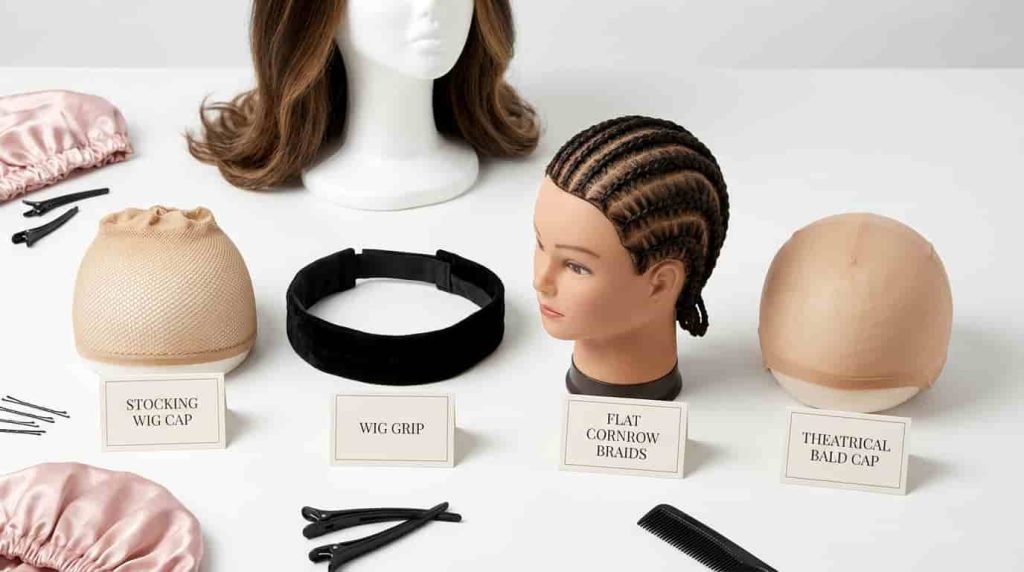
When preparing to put on a hairpiece, figuring out what to wear under a wig is essential for both comfort and a natural appearance. Securing your hair underneath and ensuring it lays flat and even will dictate exactly how well the wig sits on your head. To achieve this seamless look, the most popular under wig options include wearing a wig cap, using a wig grip, styling your natural hair into braids or flat twists, or applying a bald cap.
Wig cap vs wig grip
A wig cap, often referred to as a stocking cap, is typically placed over wrapped hair to securely hold the hair off your face and create a neat, flat foundation. Wearing a wig cap is an excellent way to protect your natural hair underneath. In fact, wearing a wig with your natural hair safely tucked under a satin wig cap is considered a low-risk styling method that prevents frictional damage and moisture loss, as satin is much gentler on the hair than cotton or nylon caps.
On the other hand, a wig grip focuses heavily on stabilization. A wig cap or a wig grip worn under a wig can significantly help the hairpiece to feel more secure without heavily relying on harsh clips or glues.
Braids and flat twists
For individuals with thicker, textured, or longer hair, braids and twists are fantastic preparation methods. Your natural hair can be braided into cornrows or two-strand twists and safely tucked away underneath the wig. Because a cornrow is a stationary braid that lays perfectly flat on the scalp, it is incredibly effective for this purpose. Twisting and braiding serve to minimize the bulk of thick hair so the wig can sit closely to the scalp without looking unnatural. Furthermore, placing the hair in these styles acts as a protective measure, keeping your natural strands safe from daily manipulation while wearing the wig.
Bald cap use cases
While wig caps are the everyday standard, there are specific scenarios that call for a bald cap. In theatrical, special effects, or professional media make-up artistry, a bald cap is often applied over wrapped hair to create an incredibly smooth, seamless, and flawless base before the wig is fitted. This technique tightly compresses the hair and mimics the look of a bare scalp, which is especially useful when applying full lace wigs or executing specific character transformations.
Best option by hair type
Choosing the best foundation largely depends on your natural hair and scalp condition:
- Short or Fine Hair: The easiest method is wrapping the hair flat around the head and securing it with anchor points (criss-crossed hair grips), followed by slipping a simple stocking cap over the hair wrapping to hold it neatly in place.
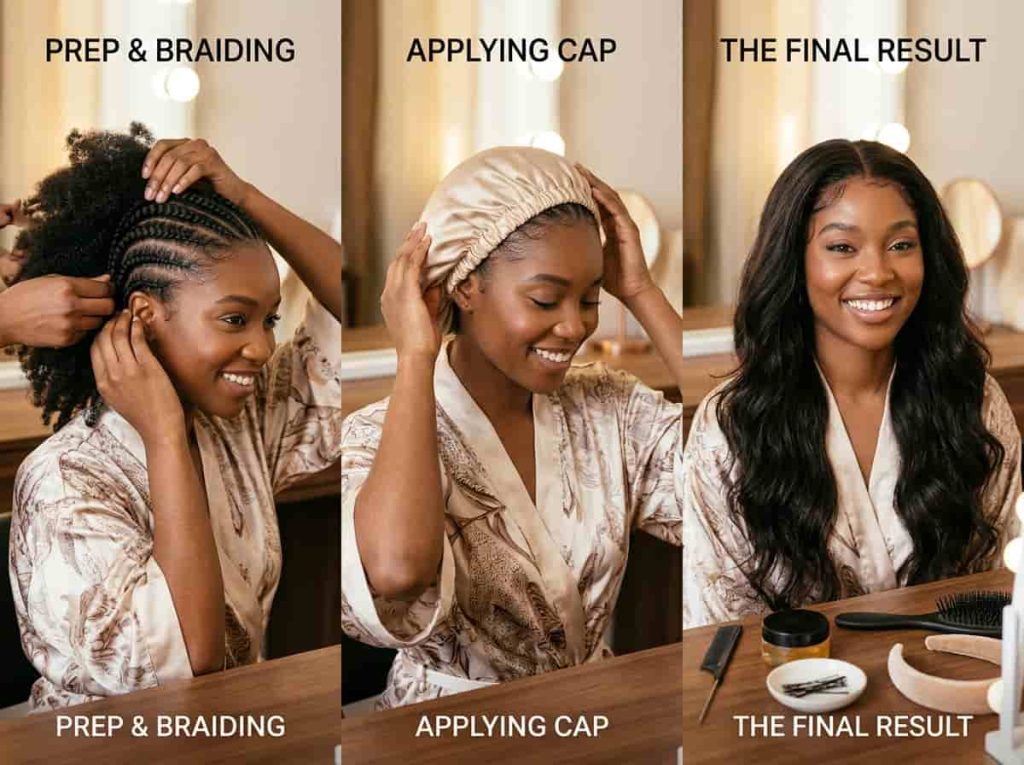
- Thick, Textured, or Long Hair: You can prepare the natural hair by braiding it. Creating cornrows or twists is the best method to reduce volume and prevent the wig from looking bumpy and unnatural.
- Hair Loss or Sensitive Scalps: If you are experiencing hair loss or undergoing medical treatments, wearing a soft wig cap or grip is ideal. It is strongly advised not to use adhesives while wearing your wig if your skin is sensitive due to treatments.
FAQ
What do you wear under a wig to keep it from slipping?
To prevent movement, a wig cap or a wig grip are the most effective accessories to wear underneath. Additionally, placing “anchor points”—which are criss-crossed hair grips strategically positioned at the crown, sides, and nape of the neck—can provide a solid base for the wig pins to attach to, ensuring the wig remains securely in place.
What to wear under wig if I have natural African American hair?
To protect textured hair, you should style your natural hair into protective cornrows or flat twists, and then wear a satin wig cap over them. This combination flattens the hair and protects delicate edges from the friction of the wig base, ensuring your natural hair remains healthy.