For many individuals seeking to shield their natural hair from daily wear and tear, the question often arises: are wigs a protective style? A protective style is essentially any hair configuration that keeps the ends of the hair tucked away, minimizing manipulation and guarding against environmental damage. While utilizing wigs as a protective style can be highly beneficial for promoting healthy hair growth, it requires proper installation and maintenance. This guide will explore the pros, cons, and best practices to ensure your wig protective style truly keeps your natural hair safe.
What counts as protective styling
Everyday practices such as combing, brushing, heat styling (like flat ironing or hot combing), and exposure to the sun and pollution contribute to hair weathering, which leads to structural damage, split ends, and breakage. Protective styling aims to give the hair a “break” from this daily trauma. By securing the natural hair close to the scalp and covering it, you reduce friction and moisture loss. When worn correctly, wigs perfectly fit this definition, allowing the natural hair underneath to rest while providing the wearer with versatile styling options.
When wigs protect hair
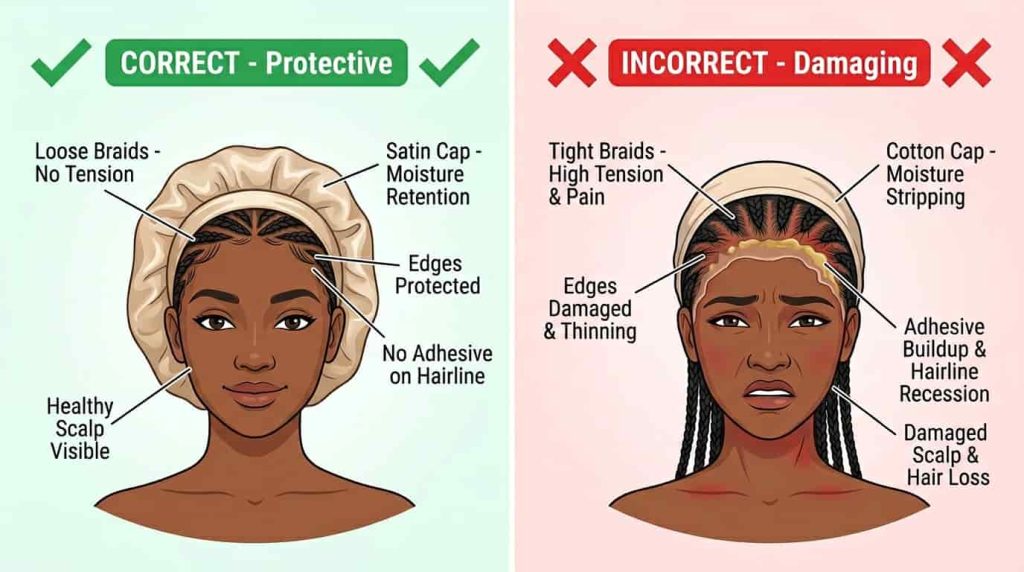
Wigs and weaves offer an excellent barrier against external elements. They are considered highly protective when the wearer’s natural hair is carefully detangled, moisturized, and braided into flat cornrows or loose twists before being tucked away underneath the wig. Because the natural hair is hidden, it is protected from the mechanical damage of daily styling tools, chemical relaxers, and the drying effects of weather. In this state, a wig acts as a physical shield, allowing the natural hair to retain its structural integrity and potentially grow longer without snapping.
Risks of poor wig habits
Despite their benefits, poor habits can quickly turn a protective style into a destructive one.
- Traction Alopecia: If the natural hair is braided too tightly underneath the wig, or if the wig itself is secured too tightly, the prolonged tension on the hair follicles can cause traction alopecia, leading to hair being prematurely uprooted and potentially causing permanent scarring.
- Adhesive and Glue Damage: Many top-selling lace wig adhesives contain ingredients known to be severe skin irritants and allergens. The use of these bonding glues to secure wigs or weave tracks has been strongly associated with irritant or allergic contact dermatitis of the scalp. Furthermore, hair glues and gels can easily rip out the delicate hair at the edges (the hairline) during the removal process.
- Friction: Wigs rubbing directly against the hairline can cause frictional damage. This is exacerbated if the wearer uses cotton or nylon wig caps, which can absorb moisture from the hair, leaving it dry and prone to snapping.
- Scalp Infections: Leaving the natural hair braided under a wig for too long without proper cleansing can lead to a buildup of sebum and products. The difficulty in obtaining a thorough cleanse while the braids are in place can result in a higher incidence of seborrheic dermatitis, bacterial folliculitis, and fungal infections like tinea capitis.
Best practices
To ensure your hair remains healthy, follow these best practices:
- Use a Satin Cap: Always wear a wig cap made of satin beneath your wig. Satin is less likely to cause frictional damage to your edges and will not absorb essential moisture from your natural hair like cotton or nylon caps do.
- Avoid Tightness: Ensure your natural hair is braided loosely by an experienced stylist. If your scalp is painful or requires painkillers after installation, the braids are too tight and are increasing your risk of traction alopecia.
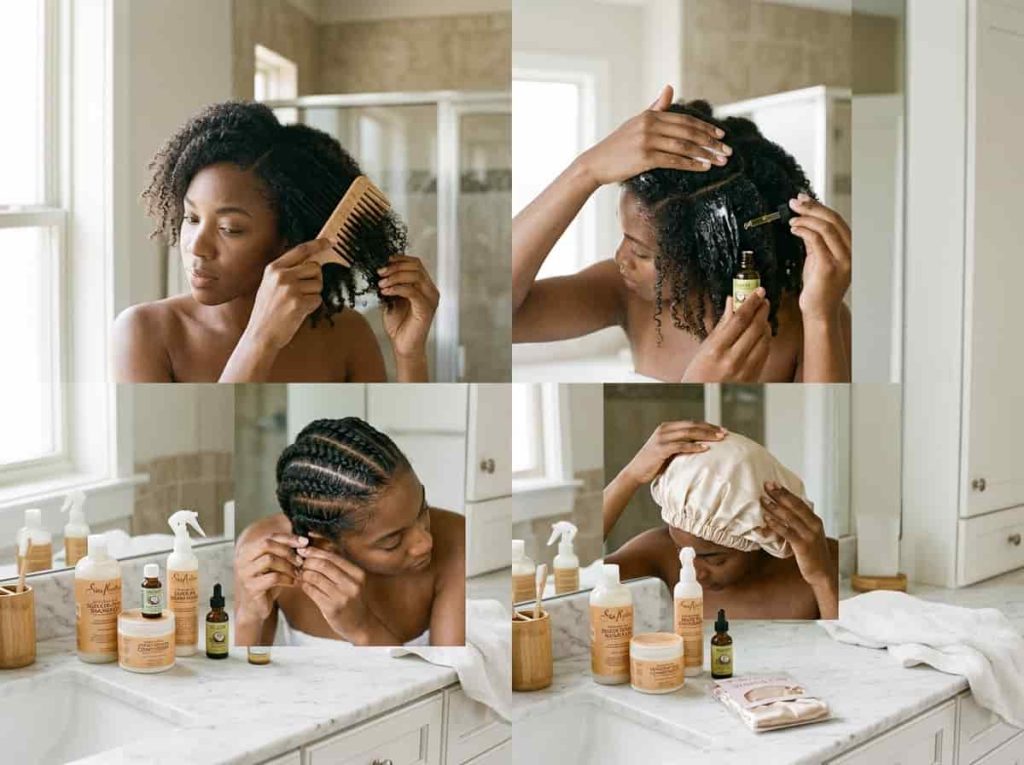
- Maintain Scalp Hygiene: Even when wearing a wig, your natural hair requires frequent moisturization and cleansing. Cleanse the scalp with a damp sponge and a mild shampoo to reduce buildup while the hair is braided.
- Protect Your Edges: Consider leaving the delicate hairs at your edges out of the braids to avoid putting tension on them. Minimize the use of harsh adhesives, and if you must use them, always perform a patch test 24 hours prior to application to avoid allergic reactions.
FAQ
Can protective style wigs damage my edges?
Yes, if applied incorrectly. The friction from the wig rubbing against the hairline, combined with the use of strong adhesives and gels, can pull out the delicate hairs along the edges. Protecting the perimeter of your hairline with a satin cap and using gentle removal methods for adhesives are critical steps to prevent this damage.
How should I care for my natural hair under the wig?
Your natural hair needs consistent care even when hidden. A basic routine should include washing the hair every one to two weeks, applying a wash-out conditioner, gently towel drying, and using a leave-in conditioner or oil to maintain moisture.
Do I need to take breaks from wearing wigs?
Yes. Taking breaks from protective styles is highly beneficial. Giving your hair and scalp a resting period of a few months between wearing tightly secured wigs, weaves, or extensions allows the hair follicles to recover and reduces the risk of acquired trichorrhexis nodosa (severe breakage) and traction alopecia.